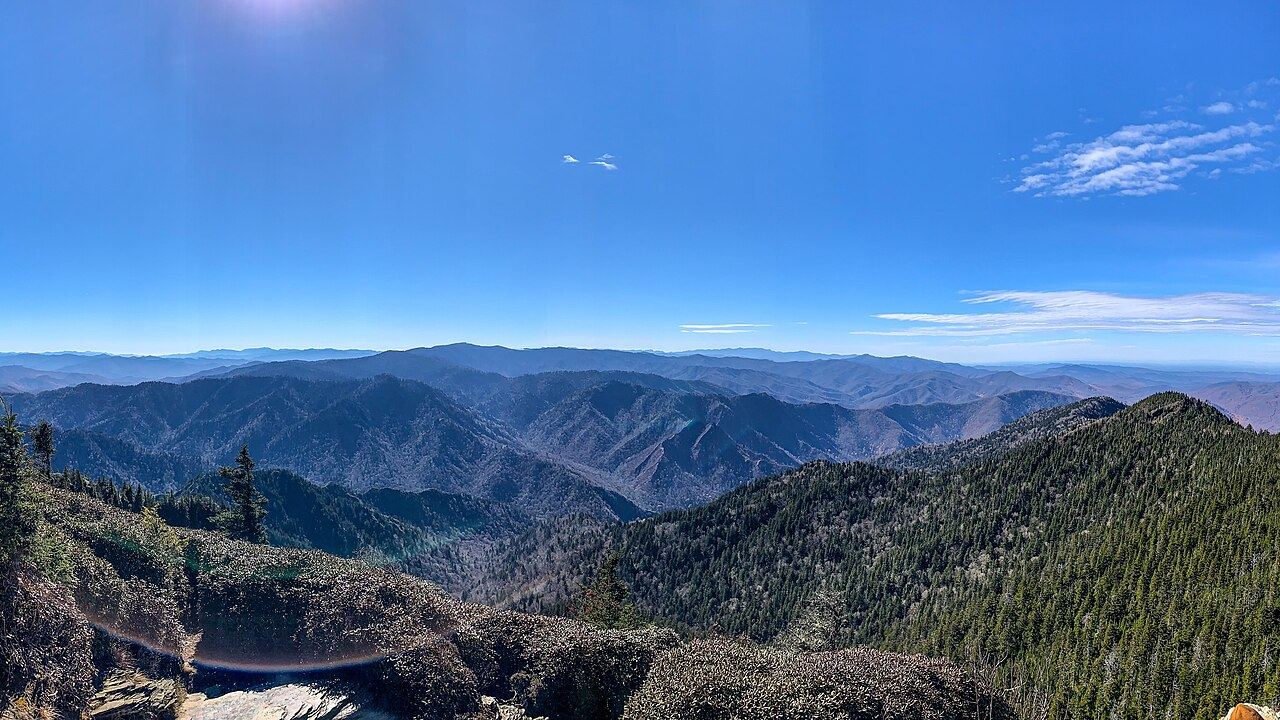
Great Smoky Mountains National Park
America’s most visited national park: misty ridges, black bears and pioneer cabins.
Photo: AppalachianCentrist · CC BY-SA 4.0
Great Smoky Mountains guide: Cades Cove, Kuwohi, Newfound Gap, waterfalls, synchronous fireflies, fall colors and parking-tag rules for Tennessee and North Carolina.
Straddling the border of Tennessee and North Carolina, the Smokies welcome about 12 million visits a year, more than any other US national park. The name comes from the blue haze that hangs over the ridges, a natural mist created by gases released from the dense forest. These mountains are among the oldest on Earth and hold an astonishing variety of life, including about 1,900 black bears.
The 18-kilometer Cades Cove loop winds through a broad valley with log cabins, churches and grist mills left by 19th-century settlers; deer and bears often graze in the meadows. Newfound Gap Road crosses the park, and a spur leads to Kuwohi (formerly Clingmans Dome), at 2,025 meters the park’s highest point, with an observation tower above the clouds.
There are more than 1,300 kilometers of trails, from easy waterfall walks like Laurel Falls to the Appalachian Trail along the ridgeline. Entry is free, but you need a parking tag for stops longer than 15 minutes.
Don’t miss
- 1Cades Cove at dawn, when wildlife is most active
- 2The observation tower on Kuwohi
- 3Waterfalls like Laurel Falls, Grotto Falls and Abrams Falls
- 4The synchronous fireflies in early June (lottery)
Insider tips
- Buy the parking tag online before you arrive; there is no entrance fee.
- Cades Cove Loop is closed to cars on Wednesdays in summer, a great day to cycle it.
- Gatlinburg gets traffic jams; enter from Townsend or the North Carolina side for a calmer start.
Photo gallery
No reviews yet. Been here? Be the first to share your tips!



Traveler reviews